


Installation
In the plumbing trade, there are two common brazing methods: hard brazing and soft brazing.
Soft soldering is performed at temperatures below 450 °C, while hard soldering is performed at temperatures above 450 °C.
Soft soldering is particularly suitable for drinking water and heating systems subject to low mechanical stress. In this process, lead-free solder is used in combination with flux or solder paste to create a reliable joint.
Brazing produces particularly strong and durable joints. It is primarily used for gas lines and industrial applications. Copper or silver brazing alloys are used, often in combination with flux. For copper-to-copper joints in particular, flux-free brazing with phosphorus-containing brazing alloys is also common.
The technical regulations of the DVGW (German Technical and Scientific Association for Gas and Water) specify which soldering techniques may be used. Proper installation is crucial for the safety and longevity of the system.
Discover ProductsSelect a soldering method for installation
Soft Soldering in Copper Pipe Installations—Here’s How!
In these videos, we show you step by step how to properly soft-solder copper pipes. Learn what materials you need and what to watch out for to create a tight and secure connection. Perfect for drinking water and heating systems! Watch now and learn more!
Soft Soldering
Soft Soldering with CuRofix®3-Spezial and CuRotin®3
Quality Builds Trust
We want only the best for our customers. That is why we place great importance on consistently high quality. We have this commitment officially confirmed each year by DEKRA through DIN EN ISO 9001 certification.
Custom Inquiries
Our experienced team is here to provide you with expert advice on your specific inquiries. We understand your individual needs and work closely with you to develop customized solutions that meet your requirements.
FELDER Recycling
When it comes to the metal “tin,” FELDER GMBH ranks among the top three companies in Germany in terms of the use of recycled raw materials. FELDER Recycling specializes exclusively in the recycling of tin-based solder waste and has been licensed as a certified waste management company since June 2000.
Product Highlights in the Installation Category
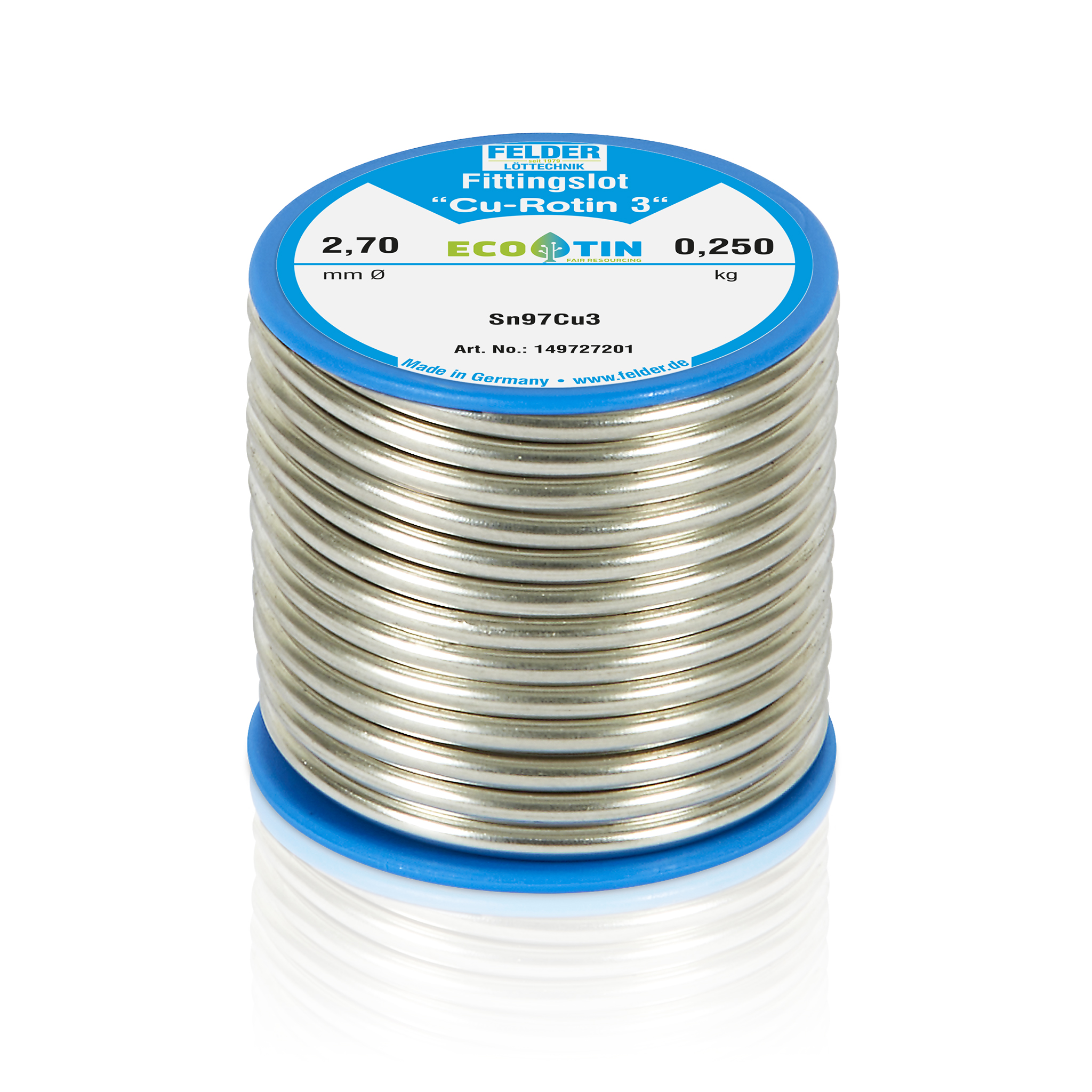 4product variants
Fitting solder Cu-Rotin® 3 (Sn97Cu3)
for soft soldering of copper pipes, with RAL quality mark of the Gütegemeinschaft Kupferrohr e.V.
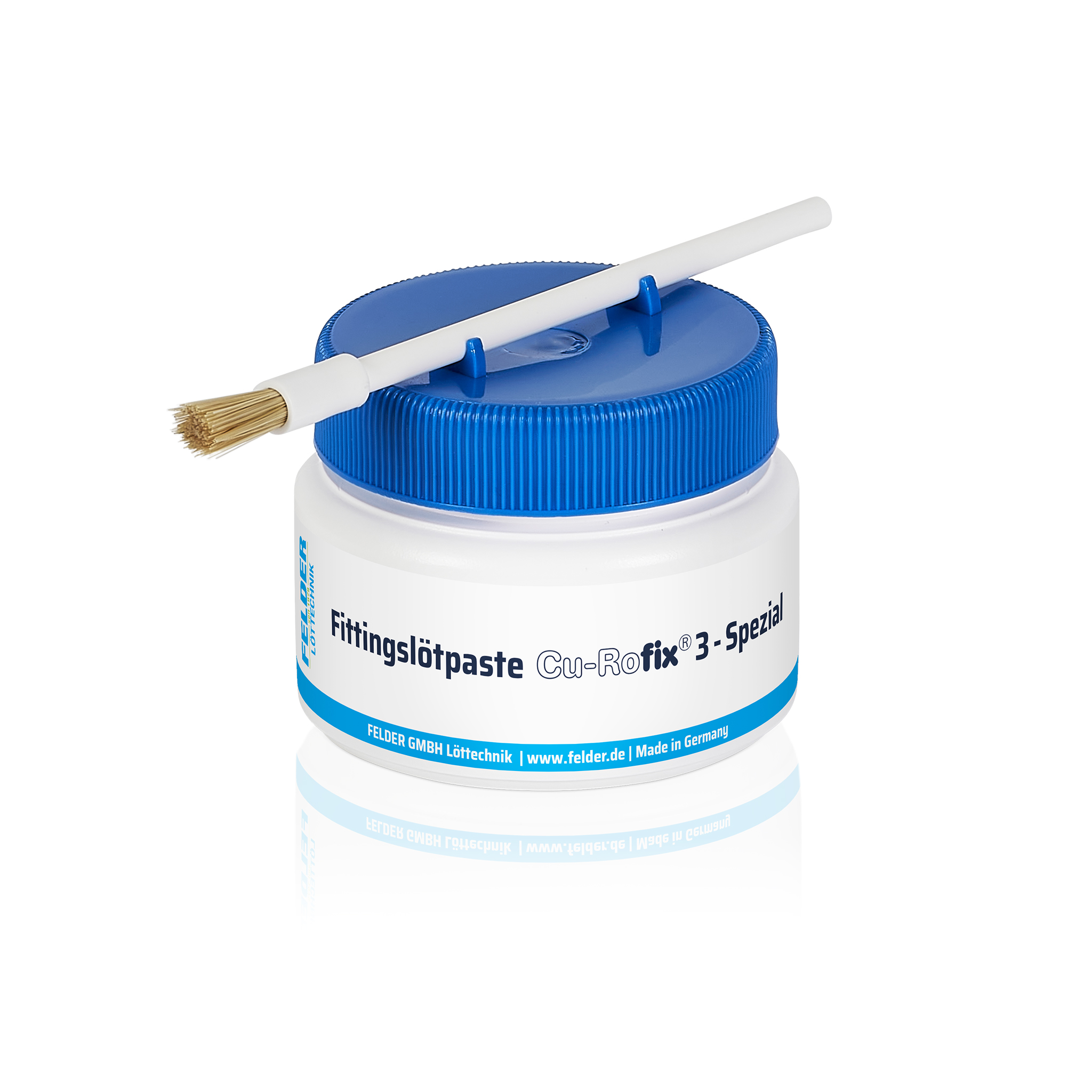 2product variants
Fitting solder paste Cu-Rofix® 3-Spezial (Sn97Cu3)
for pre-tinning and soft soldering in the copper pipe installation

Cleaning fleece “Cu-Rovlies”
for mechanical cleaning of metallic surfaces
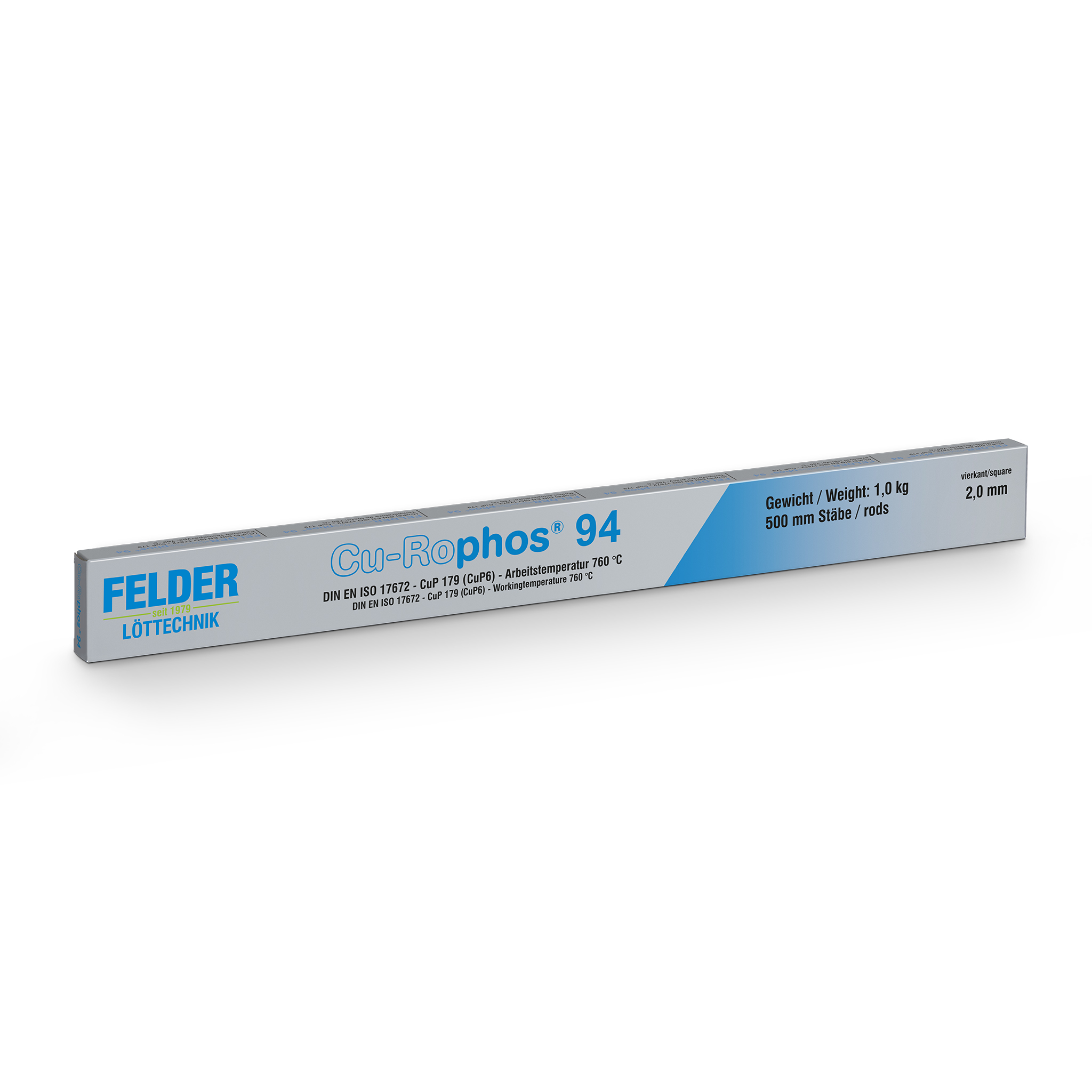 4product variants
Copper brazing alloy “Cu-Rophos 94” CuP 179
for flux-free brazing of copper pipelines
Soldering Methods in Plumbing Installations—Safe, Durable, and Leak-Proof
The two soldering methods used in plumbing installations each have their own specific requirements and advantages. Choosing the right soldering method is crucial for the quality, tightness, and durability of pipe connections. This is regulated by the technical standards of the DVGW (German Technical and Scientific Association for Gas and Water).
Learn more about the two soldering methods used in installation!
Soft Soldering in Copper Pipe Installation
According to Worksheet GW 2, “copper pipes in drinking water systems with diameters up to and including 28 mm must be soft-soldered.” In the plumbing trade, soft soldering is performed using a combination of the lead-free solder Sn97Cu3 (Cu-Rotin®3) or Sn97Ag3 (Cu-Rotin®4) in the form of solid wire, along with flux (Cu-Roflux®3) or fitting solder paste (Cu-Rofix®3/4-Special) (consisting of paste-form flux and lead-free solder powder).
Product Categories:
Brazing in Copper Pipe Installation
The DVGW worksheets GW 2 and GW 7 also describe brazing alloys and fluxes for brazing in drinking water systems. Brazing is permitted for pipe diameters of 35 mm or greater. For copper-to-copper brazed joints, flux-free brazing with phosphorus-containing brazing alloys CuP 179 (Cu-Rophos®94) and CuP 279 (Cu-Rophos®2) is permitted and common practice. According to Worksheet GW 7, a flux of type FH 10 (Cu-Rosil®) must be used for brazing. The silver solders Ag 134, Ag 145, and Ag 244 may also be used.
Product Categories: