

Electronics
To meet the demanding requirements of the electronics industry, we place particular emphasis on outstanding quality and precision in our products. Whether solder paste, flux, or solder wire, we offer a wide variety of products in a wide range of alloys that are perfectly suited to your individual needs.
Discover ProductsSelect a soldering method for electronics
ECO-TIN: Solder for the Most Demanding Applications
In the electronics industry, solder purity is often subject to very high standards. Only virgin tin or tin obtained through electroplating processes can meet these standards.
Quality Builds Trust
We want only the best for our customers. That is why we place great importance on consistently high quality. We have this commitment officially confirmed each year by DEKRA through DIN EN ISO 9001 certification.
Custom Inquiries
Our experienced team is here to provide you with expert advice on your specific inquiries. We understand your individual needs and work closely with you to develop customized solutions that meet your requirements.
Service: Solder Bath Monitoring
Solder baths should be inspected regularly, as their composition can be adversely affected during operation. Through our solder bath analysis, we provide you with insight into the condition of your solder bath and recommend measures to restore it to optimal condition.
Product Highlights in the Electronics Sector
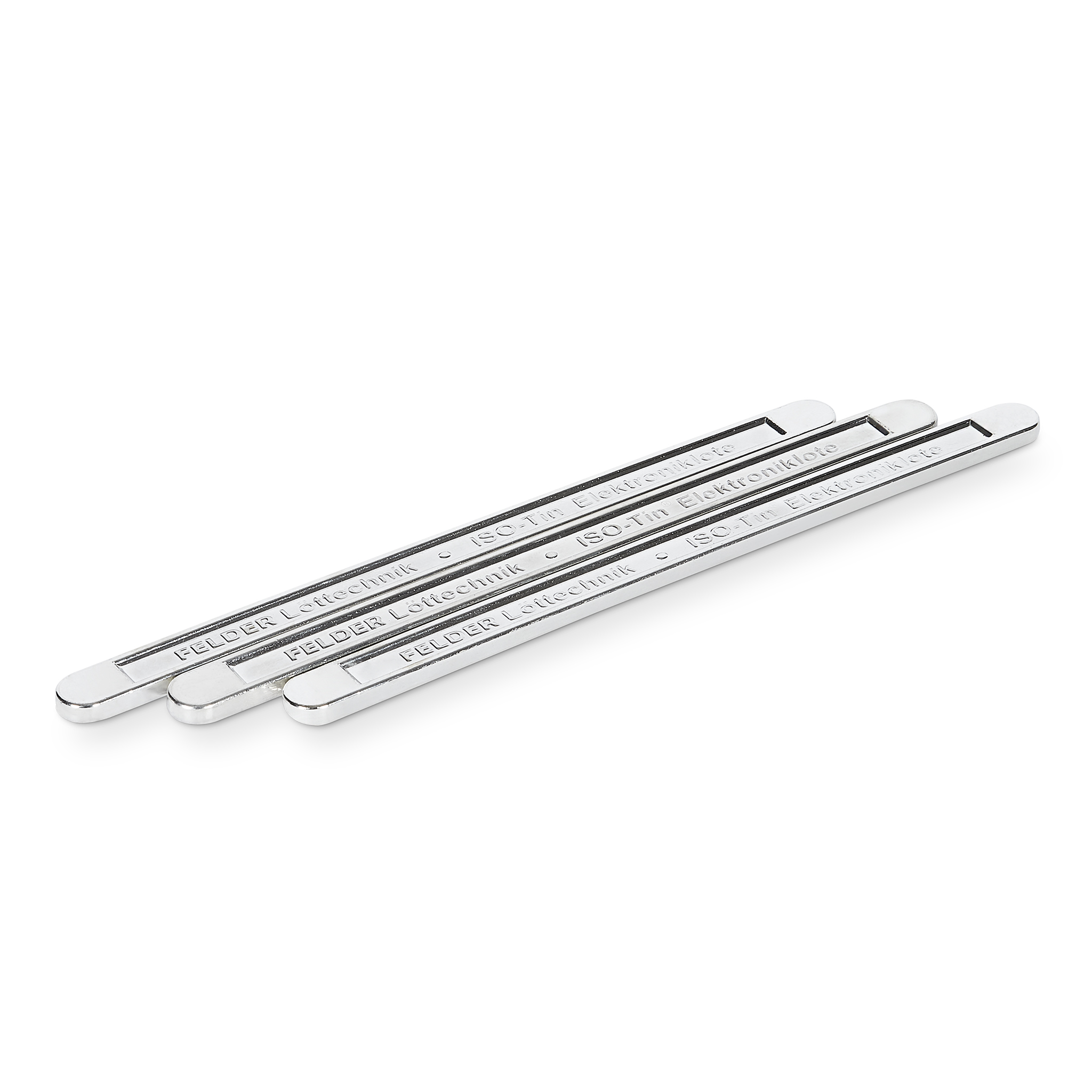 3product variants
Electronic solder ISO-Tin® Sn100Ni+
lead-free, NiGe-doped electronic solder for electronic assembly production
 4product variants
Electronic flux ISO-Flux® “ClearWave S”
Low-residue no-clean flux for wave and selective soldering processes (ORL0)
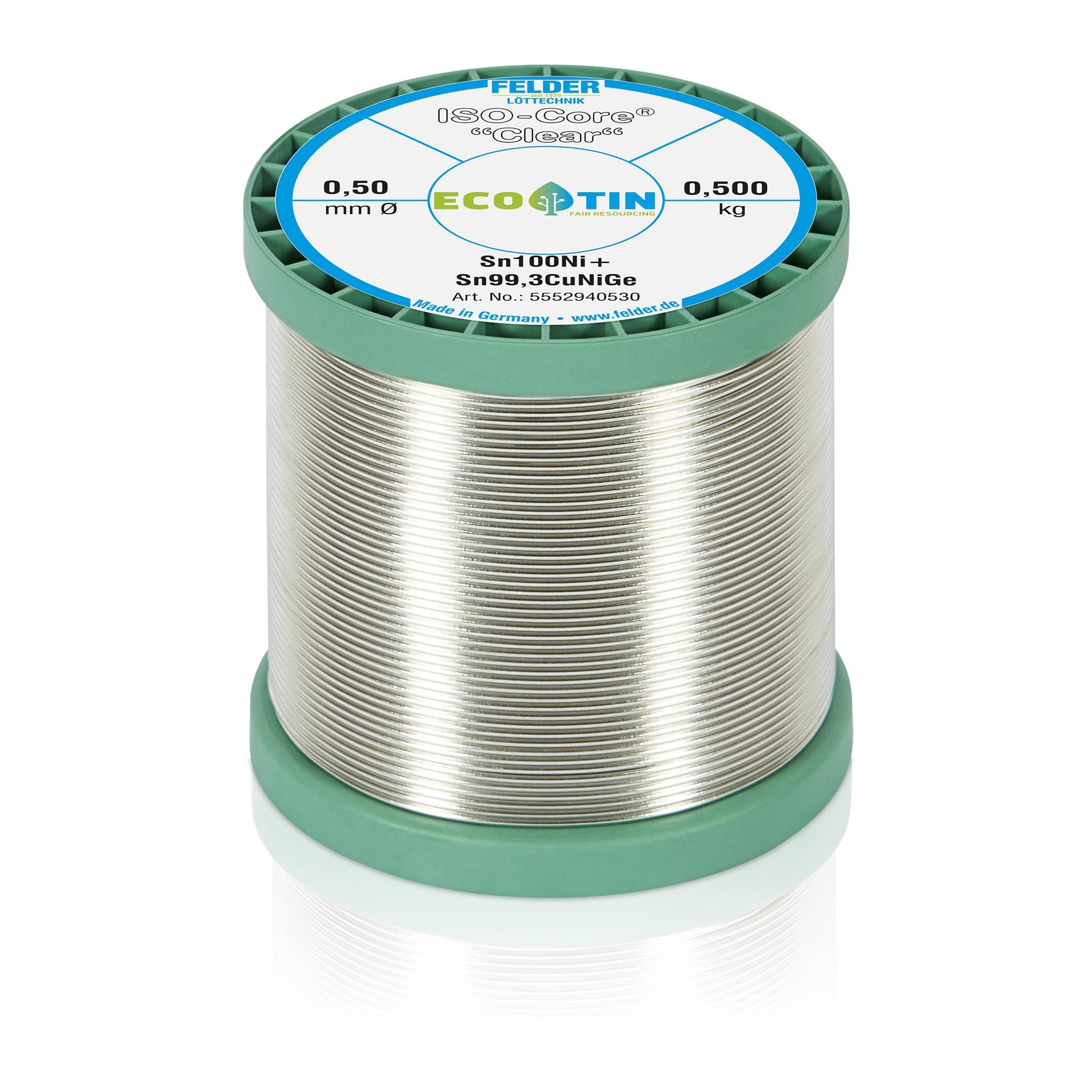 20product variants
Solder wire ISO-Core® “Clear” Sn100Ni+
flux-filled, lead-free NiGe electronic solder wire, flux type REL1
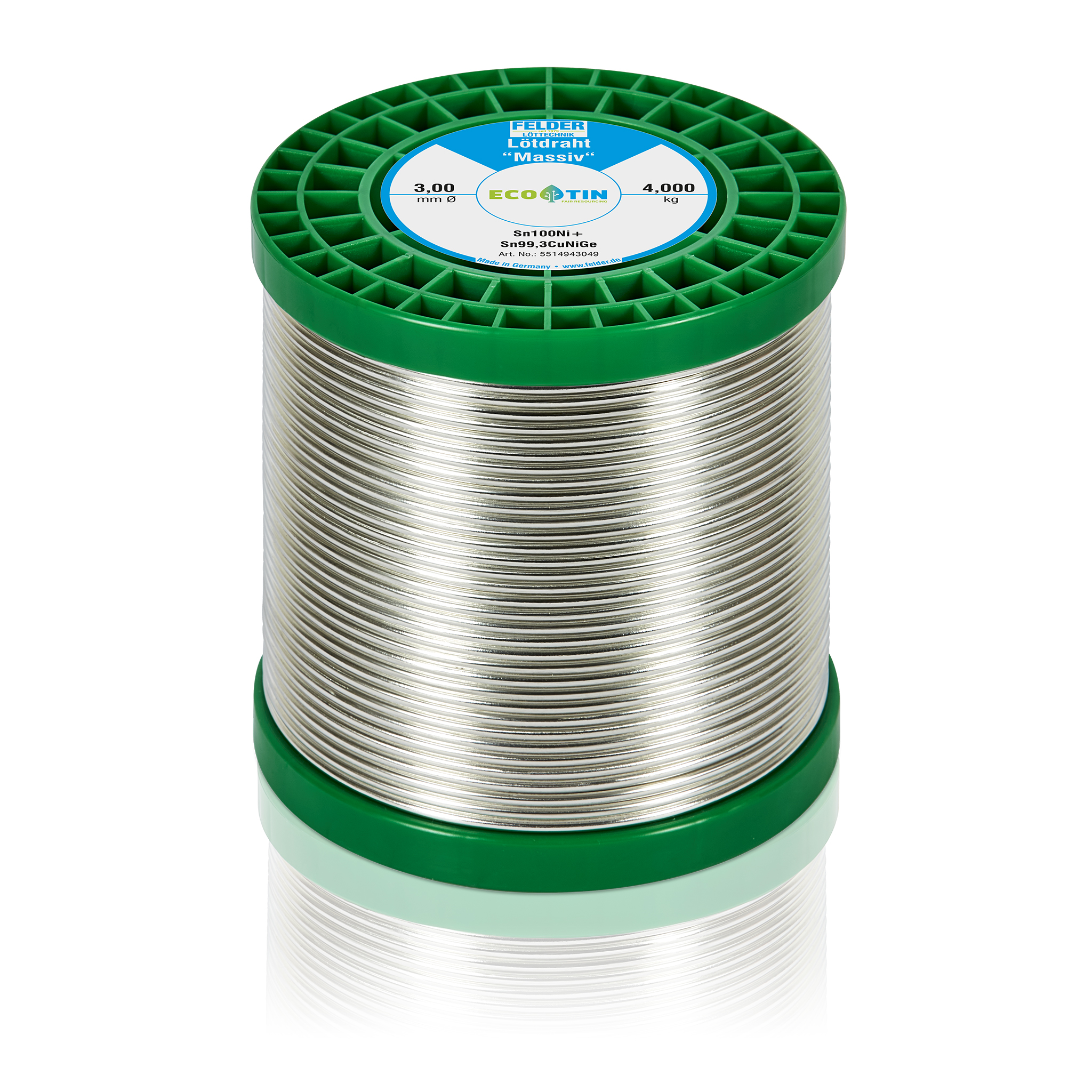 4product variants
Solder wire “Massiv” Sn100Ni+
lead-free solid solder wire SnCu0.7Ni0.06Ge0.01 for selective soldering systems
Soldering Processes in Electronics – Precision Meets Technology
Depending on the application, component size, and material, electronics engineers distinguish between different soldering processes—each with its own requirements and advantages. Choosing the right soldering process is crucial for the quality and reliability of electronic assemblies.
Learn more about the various soldering methods and their applications in electronics!
Wave Soldering and Selective Soldering
Wave soldering and selective soldering are both wave soldering processes. Both methods are used to solder electronic components onto printed circuit boards in mass production. However, they differ in how they work and in their areas of application. In wave soldering, the entire underside of a printed circuit board is simultaneously coated with flux and then immersed in a wave of liquid solder. In selective soldering, only specific, predefined areas of a printed circuit board are coated with flux and soldered. In this process, the printed circuit board is guided over a nozzle that precisely applies solder to the areas to be soldered. Choosing the right solder and flux is crucial for a successful soldering process and the longevity of the electronic assembly. Both materials interact with each other and with the surfaces to be soldered to create a reliable connection. The fluxes from theISO-Flux® “ClearWave” series are optimally matched to the FELDERISO-Tin® solder alloys.
Product Categories:
Immersion brazing
Immersion soldering is a process used in electronics manufacturing in which components or connections are joined by immersing them in a liquid solder bath. In the case of cables and enameled wires, this method is frequently used to pre-tin stripped cable ends, burn off the enamel coating from enameled wires, and connect coil contacts to the windings. High-dielectric-strength enamels require high burn-off temperatures of up to 500 °C. The selection of solder and flux must be made accordingly. FELDER cable fluxes, such as KF-32 or KF-070 and others, are tailored to the requirements of these processes, as are the suitable solders (Sn100Ni+ or SN100-403C, or Sn100Ni+Refill).
Product Categories:
Manual Soldering and Machine Soldering
In manual soldering, electronic components are joined by hand. The solder joint is heated with a soldering iron, and the flux-cored solder is applied to the areas to be joined. The flux in the wire ensures an oxidation-free surface and facilitates the wetting of the metals by the liquid solder. In robotic soldering, the soldering process is performed by an industrial robot. The robot is equipped with a soldering iron, a soldering head, or contactless soldering systems such as laser, induction, or hot air, and performs the soldering task according to a preprogrammed sequence. TheISO-Core® UltraClearsolder wires, Clear, and RA-Clear from FELDER, with their L0, L1, and M1 classifications, in combination with common lead-free solder alloys, meet all customer requirements in EAVT (electronics assembly and interconnection technology).
Product Categories:
Reflow Soldering
In reflow soldering, electronic SMD (surface-mounted) components are connected to a circuit board to form an electronic assembly using applied solder paste. This paste consists of fine solder powder and a flux, which enables the components and the conductive traces on the circuit board to be wetted. The solder paste is printed onto the board using a squeegee through a stencil or applied using a dispenser or a jet-print system. Solid-state bonds are formed by heating the entire assembly to the remelting temperature of the solder powder. With the FELDERISO-Cream® No-Clean soft solder pastes Clear and Active-Clear, as well as the special soft solder pastesISO-Cream® EL 42/58 (for low-temperature soldering) and EWL 2303 (water-washable), most SMT process requirements can be met.
Product Categories: