


Surface Technology
The processing methods range from thermal spraying with solid wires and centrifugal casting, manual tinning with soft solder pastes, through dip or continuous-strand tinning processes using soft solders and tinning fluxes, to electroplating and the tin anodes used in that process. Surface requirements include withstanding high static, hydrodynamic, and high-frequency cyclic stresses on white metal coatings in plain bearings; requirements for the solderability of the surfaces of HASL (Hot Air Solder Leveling) printed circuit boards and tin-plated electronic components, as well as the reliability of corrosion protection for hot-tinned sheet metal or electroplated tin coatings.
Discover ProductsSelect a soldering method in the section “Surfaces Technology”
Quality Builds Trust
We want only the best for our customers. That is why we place great importance on consistently high quality. We have this commitment officially confirmed each year by DEKRA through DIN EN ISO 9001 certification.
Custom Inquiries
Our experienced team is here to provide you with expert advice on your specific inquiries. We understand your individual needs and work closely with you to develop customized solutions that meet your requirements.
FELDER Recycling
When it comes to the metal “tin,” FELDER GMBH ranks among the top three companies in Germany in terms of the use of recycled raw materials. FELDER Recycling specializes exclusively in the recycling of tin-based solder waste and has been certified as a specialized waste management company since June 2000.
Product Highlights in the Surface Finishes Category
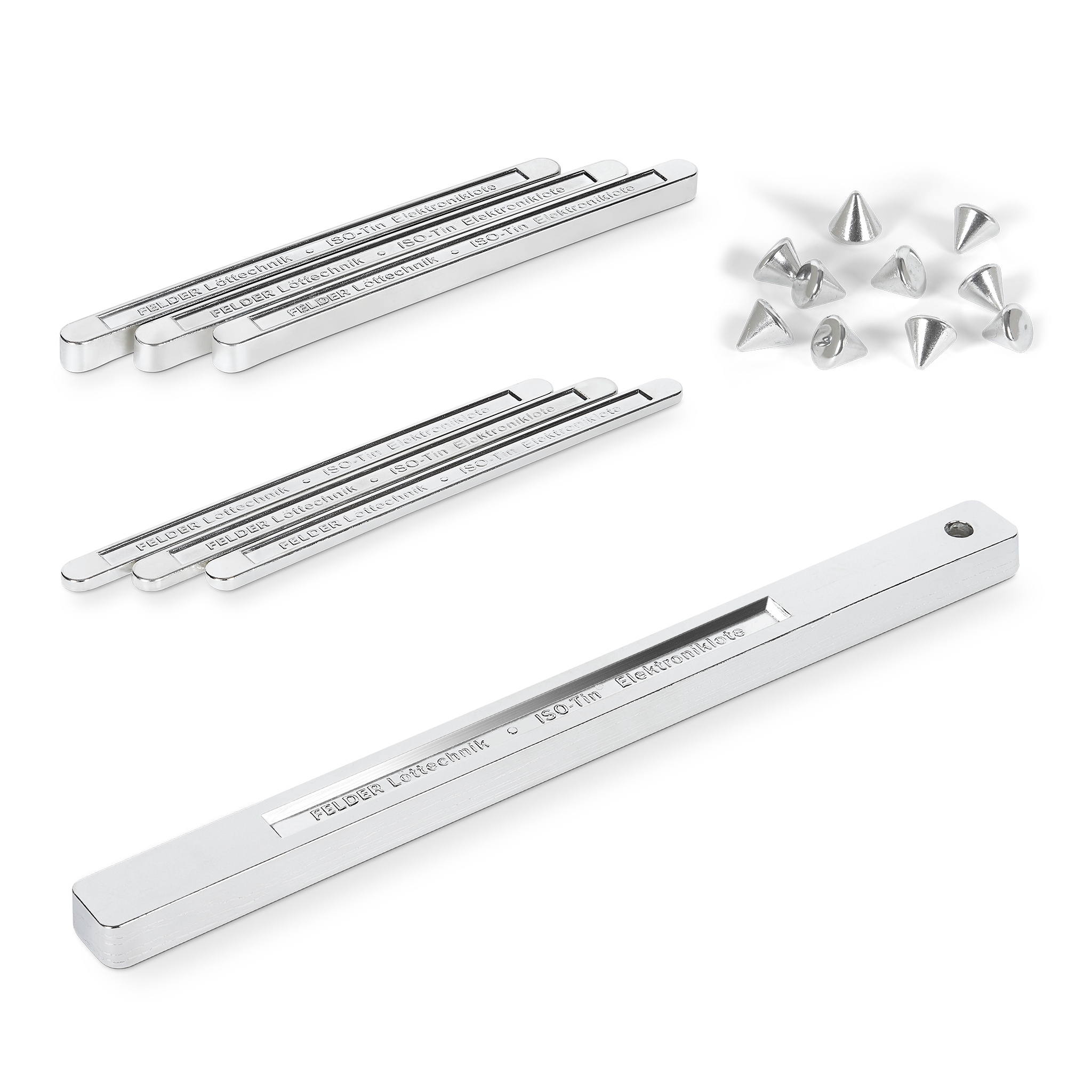
HASL-solder ISO-Tin® HAL-Sn100Ni+
lead free, NiGe-doped SnCu-solder alloy for hot air solder leveling
HASL-solder alloy ISO-Tin® HAL-Sn99Ag+
NiGe-doped HASL solder with 0.3 % silver for lead free hot plating of pcbs for electronic assembly production
 4product variants
Bearing metal Sn89Sb7.5Cu3.5, solid wire
lead free bearing metal wire for thermal spraying
Soldering Processes in Surface Technology
Thermal spraying, centrifugal casting, and tin plating optimize surfaces for maximum durability and functionality.
Learn more about soldering processes in the field of surface treatment!
Thermal Spraying
In thermal spraying, a coating material is remelted by a flame, plasma, electric arc, or laser, atomized in a stream of inert gas, and sprayed onto the workpiece to be coated at high temperature and velocity. In addition to the appropriate equipment, the thermal spraying process requires the use of solid wires of the highest quality and can be supported by fluxes or tin-plating pastes tailored to the base material. By selecting the appropriate spray material, properties such as hardness, wear resistance, corrosion resistance, and conductivity can be tailored.
Product Categories:
Centrifugal Casting
In centrifugal casting, molten metal (plain bearing metal) is poured into a rotating mold. The centrifugal force generated during the casting process ensures an even distribution of the molten metal within the mold and results in a dense, pore-free structure. This is of great importance for plain bearings, as pores and voids can impair the bearing’s service life and performance. The choice of alloy depends on the specific requirements of the bearing. Tin- or lead-based white metals are frequently used, as they are characterized by their good sliding properties. To ensure an optimal bond between the sliding layer and the backing, the backing must be activated with flux and/or tinning paste prior to the centrifugal casting process.
Product Categories:
Tinning
There are various tinning methods, which are used depending on the required material properties: ranging from manual tinning with soft solder pastes to dip or continuous-flow tinning processes using soft solder and tinning flux, all the way to galvanic plating (electrolytic dip) and the tin anodes or cones used in that process. In electronic assembly manufacturing, HAL-coated (Hot Air Leveling) printed circuit boards and electronic components with tin-plated contacts and component leads are used, among other things. Here, solderability is the primary requirement for the surface. Lead-free HAL solders and special fluxes for the HAL process are required.
Product Categories: